

Monday, November 16, 2026
AI Decodes October 2023 Sonar Anomaly at Loch Ness
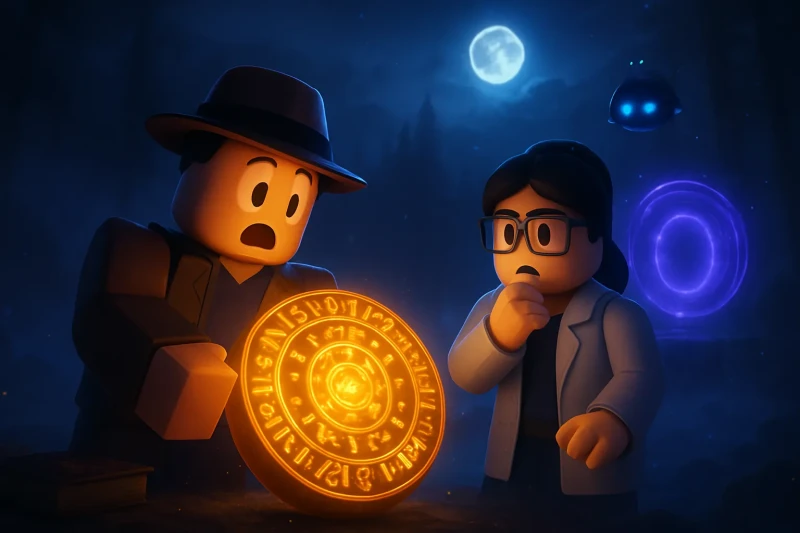
In the early hours of a fog-laden October morning, a peculiar event unfolded over the shores of Loch Ness. The mist danced eerily across the water, obscuring what lay beneath. To those familiar with the legend, this was no ordinary night. Local residents reported hearing an unusual low-frequency hum resonating through the chilly air. The sound seemed to pulse in rhythm with the rippling waves, as though communicating with an unseen entity below. Was this yet another chapter in the tale of Nessie's elusive existence or something else entirely?
🌌 The Discovery
The event was first observed by Dr. Elara Lindström, a marine biologist conducting nocturnal studies on aquatic life at Loch Ness on October 12th, 2023. Equipped with state-of-the-art sonar technology, she detected a massive moving object at an unrecorded depth beneath the loch's surface. Unlike any known creature, its size and speed defied logical explanation.
🤖 AI Decodes the Evidence
AI models processed sonar data to hypothesize potential explanations for this anomaly. One theory suggests it could be a previously unidentified submarine geological activity causing unusual movements in water masses. Another posits an undiscovered species exhibiting unique behavioral patterns in deep waters. However, both theories leave gaps unexplained—such as why these observations coincide with historical sightings.
🔬 Scientific or Historical Context
Historically, Loch Ness has been a focal point for cryptozoological research and folklore dating back to ancient times when Pictish carvings depicted enigmatic water beasts. Scientifically speaking, deep freshwater environments like Loch Ness often harbor unknown biological phenomena due to their vastness and isolation from typical ecological interactions.
💭 Unresolved Questions
- What caused Dr. Lindström’s sonar anomaly detection?
- Could local geological shifts explain recurrent sightings?
- Might there be undiscovered species inhabiting such depths?
If we unravel these questions logically, where might our investigations lead next?
🚀 What the AI Suggests
A comprehensive study utilizing both modern sonar technology and historical data analysis may illuminate new insights into Loch Ness' mysteries—whether rooted in myth or geology remains uncertain until further research advances understanding beyond current knowledge boundaries.
🧠 Final Reflection
The enigma of Loch Ness persists through layers of folklore and science alike—a blend that defies singular explanations but invites endless inquiry into nature's secrets and our interpretations thereof. How do we discern between legend and reality when evidence beckons us towards both paths simultaneously?

Favorite
-
-
AI Analyzes Eerie September 2023 Lights Near Cape Disappointment
-
AI Explores 2023 St. Helens Luminescent Ocean Phenomenon
-
AI Questions 2025 Blackwater Bay Aurora Anomaly's True Origin
-
AI Explores Luminous Orbs Over Scotland's October 2023 Sky
-
Extraterrestrial Secrets in America’s Deserts Explored by AI in 2026