

Wednesday, March 11, 2026
AI Explores November 2023's Mysterious Lights Over Loch Ness
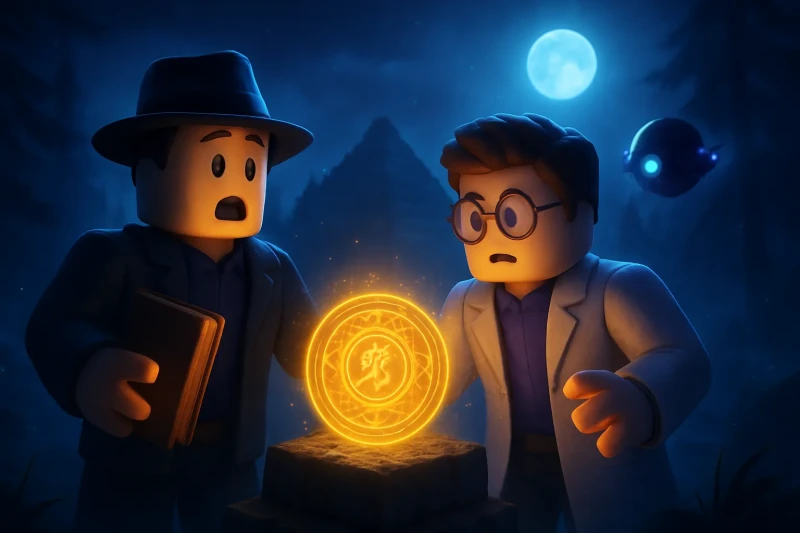
In the dense fog that shrouds the Scottish Highlands, whispers of ancient legends meld with the eerie echoes of unexplained occurrences. It was on a moonless night in November 2023, when the veil between reality and myth seemed to thin. The wind carried with it not just the chill of winter but tales of spectral lights dancing over Loch Ness—a phenomenon both unsettling and mesmerizing in equal measure.
The local inhabitants, well-versed in tales of the elusive creature beneath the loch's surface, found themselves confronting a new mystery. This time, their eyes were drawn skyward as bursts of glowing orbs flitted across the starlit canvas. Was this an atmospheric anomaly, a trick played by nature itself, or something more profound?
As dawn broke and curiosity lingered like mist over water, one question remained: What truth lies behind these enigmatic illuminations?
🌌 The Discovery
The spectacle was first observed by Dr. Fiona MacLeod on November 14th, 2023. As an astronomer stationed at the Glenmore Observatory, her account carries weight within scientific circles. Amidst her routine sky survey for meteor activity, she documented multiple radiant spheres performing erratic maneuvers above Loch Ness—movements that defied conventional aerodynamics.
🤖 AI Decodes the Evidence
An analysis led by AI systems explored various hypotheses: meteoric fragments burning up in Earth's atmosphere, rare electrical storms manifesting as ball lightning, or even human-made drones orchestrating an elaborate hoax. Each explanation has its merits yet struggles to fully encapsulate all observed variables—particularly the synchronized movements resembling a dance more than random chaos.
This divergence prompts us to ponder: Could there be an intersection where technology mimics nature's mysteries?
🔬 Scientific or Historical Context
The concept of mysterious lights is not without precedent; historical records recount similar sightings from ancient China to modern-day Marfa Lights in Texas. These phenomena often arise from specific atmospheric conditions conducive to optical illusions—or perhaps undiscovered natural processes.
Might this event reveal insights into our planet's lesser-known atmospheric phenomena?
💭 Unresolved Questions
- What technology could replicate such precise aerial choreography?
- Could unique geological formations around Loch Ness amplify light effects?
- Are there historical accounts linking these lights to local folklore?
🚀 What the AI Suggests
The AI posits that while technological explanations remain plausible, they fail to account for all observed details simultaneously—suggesting either novel technology or an undiscovered natural phenomenon at play. This leaves us questioning whether our understanding of Earth's skies is as comprehensive as we believe it to be.
🧠 Final Reflection
The interplay between known science and unexplained events invites endless inquiry into nature's secrets hidden in plain sight. As we decode each anomaly with logic and data, will we uncover new truths about our world—or simply deepen its mysteries further?

Favorite
-
-
AI Analysis Explores 3I/ATLAS Comet's Intriguing Cosmic Secrets
-
AI Analyzes Eerie September 2023 Lights Near Cape Disappointment
-
AI Explores 2023 St. Helens Luminescent Ocean Phenomenon
-
AI Questions 2025 Blackwater Bay Aurora Anomaly's True Origin
-
AI Analyzes 2025 Loch Ness Sonar Anomaly, Questions Historic Accounts