

Tuesday, December 30, 2025
AI Decoding Yuka's RNA: Unraveling 40,000-Year-Old Biological Secrets
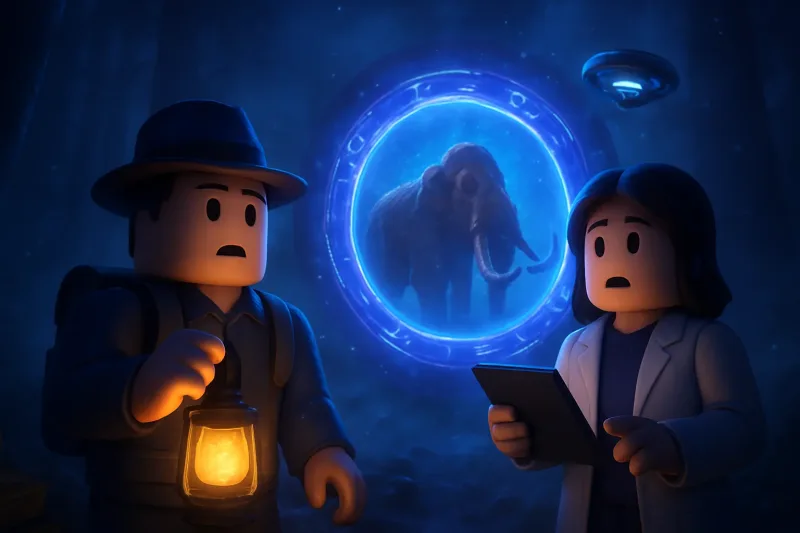
In the heart of Siberia, where the icy tendrils of time remain ever present, an ancient secret lay hidden beneath layers of permafrost. The moonlight cast a silvery glow on the frozen expanse, illuminating the soft contours of snow-clad landscapes and whispering echoes from a bygone era. It was here that the mummified remains of Yuka, a juvenile woolly mammoth, were discovered — suspended in time like a forgotten relic.
Yuka's discovery was not merely an archaeological marvel but a window into Earth's prehistoric past. Buried for nearly 40,000 years, her remarkably preserved tissues promised answers to questions long thought unanswerable. As researchers delicately extracted her ancient secrets under flickering lamplight, they embarked on a journey through genetic corridors once deemed impassable.
Yet as science peered deeper into this prehistoric tapestry, new mysteries surfaced alongside revelations: Could it be possible that molecules so fragile had withstood millennia against nature’s relentless decay?
🌌 The Discovery
The discovery unfolded in 2025 when researchers at Stockholm University announced an unprecedented feat: they had successfully sequenced RNA from Yuka's remains. This breakthrough defied conventional wisdom claiming RNA's fragility made its preservation over thousands of years implausible.
🤖 AI Decodes the Evidence
As theories competed for dominance amid swirling fogs of conjecture and logic alike emerged several perspectives—foremost being whether such preservation defies natural degradation laws or signals unique environmental conditions where Yuka lay undisturbed. Skeptics argue contamination cannot be ruled out entirely; others propose adaptive mutations may have bolstered molecular resilience over eons.
If RNA could indeed survive intact through ages untold—what other biological secrets might await discovery within Earth’s deepest freezers?
🔬 Scientific or Historical Context
The potential implications are vast: understanding how RNA survived could redefine biological conservation paradigms across epochs and geographies. Historical patterns show creatures preserved by extreme cold often unlock insights into evolution—but what if future finds connect us directly with pandemics past via ancient viral genomes?
Might this open doors not only backward toward history yet forward too—to preemptive healthcare innovations inspired by nature itself?
💭 Unresolved Questions
- How did Yuka's environment contribute to RNA preservation?
- Might other specimens hold similar undiscovered secrets?
- What role does climate play in molecular longevity?
If these findings reshape scientific assumptions about life after death—how will humanity choose which truths merit pursuit above all others?
💡 From markets to mysteries—explore the logic behind both.
🚀 What the AI Suggests
This unraveling tale invites fresh exploration—a clarion call urging science beyond current knowledge frontiers toward realms previously imagined solely within fiction’s bounds. Yet amid discoveries lies caution: each answer spawns countless questions anew—and therein lies humanity’s greatest challenge alongside opportunity; can we balance curiosity with responsibility when peering deep into our own genesis stories?
🧠 Final Reflection
The case of Yuka challenges our understanding of time and biology profoundly. Does this find herald new scientific breakthroughs or remind us that Earth's archives still hold unfathomable mysteries waiting quietly beneath their frosty veils? Who truly knows what lies ahead for those daring enough to seek?

Create all your AI images, videos, and stories in one place — OpenArt.
Favorite
-
-
AI Analysis Explores 3I/ATLAS Comet's Intriguing Cosmic Secrets
-
AI Analyzes Eerie September 2023 Lights Near Cape Disappointment
-
AI Explores 2023 St. Helens Luminescent Ocean Phenomenon
-
AI Questions 2025 Blackwater Bay Aurora Anomaly's True Origin
-
AI Analyzes 2025 Loch Ness Sonar Anomaly, Questions Historic Accounts